Blog Posts
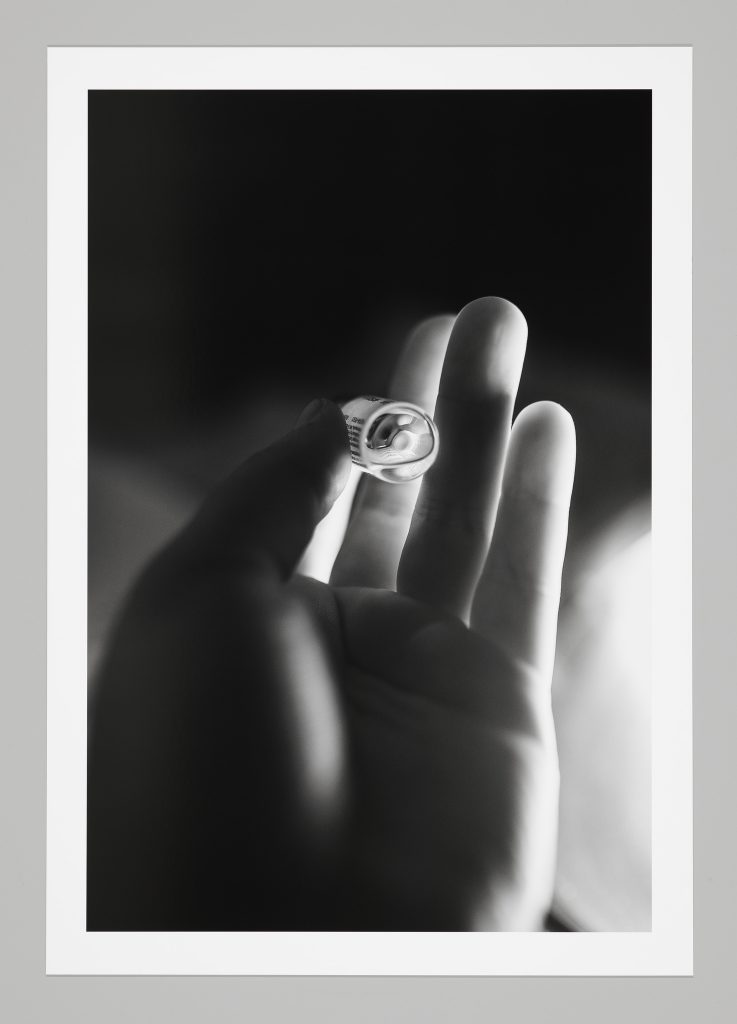
Image by Ellie Perez (2018) ‘t’
BLOG POSTS 1-4
Blog Draft 1:
The Social Model of Disability
‘The social model of disability’ posits, that one is not disabled by one’s own physical or cognitive ability, but rather by barriers in the world and discriminatory societies. According to Tom Shakespeare (2004) The British ‘strong social model’ (SSM) of disability, originated in disability movements of 1970s. ‘Fundamental Principles of Disability’ (1976), UPIAS[1] defined disability not as an ‘impairment or deficit of body or brain, but as a relationship between people with impairment and a discriminatory society’ (9).
Speaking about BLM and the Paralympics, Ade Adepitan (2020) discusses intersections of racism and disability, which compound exclusion of both black and disabled achievement. The Paralympics allows those who are hindered by these intersections a space in which to become visible and the agents of exceptional achievement. However, disability is considered by Adepitan to be a form of segregation that offers only these small, exceptional spaces in which such achievement is possible, rather than rethinking social design. In short, the narrow bandwidth of such schemes merely ameliorates segregation, rather than ending or overthrowing it.
Chay Brown(2023) is a trans, gay, white
man who considers intersections of the
queer + trans body in relation to disability,
acknowledging his white privilege and
fact that his disability is ‘hidden.’ Although
he has experienced the support of the
LGBTQ+ community, he has had to learn to
‘read’ intentions + the subtle NVC[2] of
gay men.
Christine Sum Kim is a deaf artist who stresses that, “my life is one big echo,” repetitions and patterns which constantly strive for clarity and to be “heard.” She claims that “learning sign language is easier than teaching a deaf person to hear,” putting emphasis on the hearing world to do the labour required to be inclusive. While there is a shared deaf culture and community, the artist notes that one can get “stuck there”. She envies artists who have privilege enough to be ‘misunderstood’. For Christine, misunderstandings can negatively affect her rights and lead to further exclusion from the hearing world.
In all of these examples, attention is drawn to the amount of labour required by those who are considered “disabled” in order to have a chance of being seen, heard or understood. The interviewees each intimate that some of this responsibility should be placed upon the wider society which excludes them, allowing a shared lived culture. Each interviewee draws attention to the small, particularised, segregated space in which they must operate in order to have a chance of being present to the world. As a result, the fact of disability residing within the wider society, rather than with particular individuals, is made vivid.
‘… the all-too-frequent theorization of disability as “possibility rather than a limit,” highlight[s] how utopian discourses of disability identity can too easily occlude the material and economic conditions creating disablement on a global scale’ (Kim on Everelle 2020, 268).
These examples may be troubled by the notion of exceptionalism (the world class athlete; the successful artist; the founder of a disability rights organisation) and ‘utopian’ ideas around the possibilities that negate the mundane material realities of daily lived experience for the ‘othered’ body (Kim 2020).
My experience of working in residential centres for people with physical disabilities comes to mind. At the time, I wondered why such bodies were so rarely seen in public places? I am conscious of the small numbers of students with visible disabilities at UAL and wonder why disciplines which are largely digitally based today, still appear so inaccessible? It seems ironic that digital technologies (keyboard, screen and text-reading apps), have evolved out of assisting those with disabilities, so why is there is not greater visibility? I am curious at what point in the education system people with visible disabilities are being ruled out of inclusion within the university?
It has been suggested that automated digital systems may further perpetuate discrimination and eugenicist proclivities in the digitisation of welfare data (van Toorn et al 2024).
Reid Davenport (2022) highlights the fact that while he is ‘looked at’ he is not ‘seen’. As a documentary film maker with Cerebral Palsy, Davenport shoots a film from his own embodied perspective. This documentary highlights how the camera is one of many technologies designed to ‘frame’ and see only certain bodies.
References:
Brown, Chay in Parapride (2023) Intersectionality in Focus: Empowering Voices during UK Disability History Month 2023 Youtube. https://www.youtube.com/watch?v=_yID8_s5tjc&t=8s
Davenport, Reid (2022) ‘I Didn’t See you There’ Report Media.
Kim, B. Jina (2020) Disability in an Age of Fascism. American Quarterly. 72:1, March 2020, pp. 265-276 (Review)
Paralympics GB (2020) ‘Ade Adepitan gives amazing explanation of systemic racism’ paralympics GB Youtube:https://www.youtube.com/watch?v=KAsxndpgagU&t=1s
Shakespeare, Tom (2004) Social models of disability and other life strategies. Scandinavian Journal of disability studies. Taylor and Francis
Sun Kim, Christine (nd) “Friends & Strangers” – Season 11 | Art21 youtube: https://www.youtube.com/watch?v=2NpRaEDlLsI&t=195s
van Toorn, G. and Soldatić, k. (2024) Disablism, Racism and the Spectre of Eugenics in Digital Welfare. Journal of Sociology: 60:3 pp. 523-529.
Footnotes
[1] (Union of Physically Impaired Against Segregation)
[2] Non- Verbal Communication
Religion
Due to current antagonisms between religious groups, it seems important to distinguish between religion and religious extremism. In the West, religious extremism has tended to be associated with Islam- itself an act of Islamaphobia that dates back to at least the Middle Ages. It is noticeable that during the ensuing centuries, animosity between Islam and Christianity has retained its grip, often as a West versus East dichotomy; or as Christianity vs. Islam.
While we hear so much in the media about Islamic extremism, today, the west is experiencing a resurgence of White Christian extremism, which fails to acknowledge itself as such, often has evangelical roots. This extremism is naturalised by appeals to Christian faith, against a perceived potential dismantling of White Western hegemony, presenting as a fear of ‘the other’. This ‘other’ can take numerous forms- as Islam; as immigrant; as the subject of EDI policy, or as ‘international’ student.
Tech billionaires like Peter Thiel proclaim their evangelical leanings. Elon Musk more cautiously claims to be ‘a cultural Christian’, both support MEI (Merit, Excellence, Intelligence) as an antidote to EDI (Bernard 2025). Influential silicone valley entrepreneur Alex Kamp referred to ‘wokism’ as ‘a thin, corrosive, cancerous… pagan religion infecting our universities (ibid).
For example, Cynthia Stark, chair of the Department of Philosophy at the University of Utah, USA, describes the university’s plan “mandating that all students take general education courses on the topics of Western civilization and the rise of Christianity” that will be rolled out at all public universities in Utah’ and a new policy, announced by the university president, “that returned missionaries from the Church of Jesus Christ of Latter-day Saints will be eligible to receive up to 12 college credits for their service to the church” (Weinberg 2025). In these instances, we see supremacist actions thinly veiled within the auspices of Christianity. Similarly, the appetite for ‘end times facism’ (Klein and Taylor 2025), borrows the mantle of Christian apocalyptism to justify supremacist and eco-fascist tendencies (Neo-Darwinism [‘survival of the fittest] that informed Hayek’s neoliberalism; blaming resource shortage on the Global South and immigration; Climate Change denial, and/or accelerationist narratives that advocate hastening ‘end times’). I do not believe these to be genuine expressions of a religious sentiment, due to their annexing of intolerance.
In a recent TED talk, Anthony Appiah stresses that ‘there is no such thing as religion’, neither is religious belief reducible to an alignment with a God or spiritual being. In the latter part of the video, he continually stresses ‘the normalcy’ of those who have a religion in Ghana, which some may find somewhat patronising. It interestingly corresponds with a talk by Simran Jeet Singh, who discusses the evident ‘criminalisation of Islam’, that attempts to paint all members of the community ‘with the same brush’ (Jeet-Singh). He claims his religious colleagues must continually “prove they are normal,” which reminds me of Appiah’s claims for ‘normalcy’ of the religious. I wondered whether it is implied that ‘”normal” people’ are considered secular/ or even Christian? Are we in danger here of reproducing white secularity as a norm against which ‘others’ are judged (see next blog)? What is the ‘norm’ that is the measure here?
References:
Appiah, Anthony (2014) Is Religion Good or Bad? TEDSalonNY https://www.ted.com/talks/kwame_anthony_appiah_is_religion_good_or_bad_this_is_a_trick_question (accessed 30 June 2015)
Benard, Zoe (2025) Christianity was Borderline Illegal, now its the New Religion. Vanity Fair
Jeet Singh , Simran ()
Klein, N and Taylor, A. (2025) The Rise of End Times Facism 13 April 2025 Guardian Available: https://www.theguardian.com/us-news/ng-interactive/2025/apr/13/end-times-fascism-far-right-trump-musk
Weinberg, J. (2025) University of Utah cans History and Philosophy Science Major Amidst Political and Administrative Chaos. dailynous.com May 19 2025. Available: https://dailynous.com/2025/05/19/university-of-utah-cans-history-and-philosophy-of-science-major-amidst-political-and-administrative-chaos/
Race
According to the Equality Act 2010, ‘Race’ can refer to skin colour; nationality; citizenship; ethnic or national origins (section 9). The Law Society describes ‘race’ as physical attributes or traits, in contrast to ‘ethnicity’, which is deemed to be the long shared cultural experiences, practices, traditions, ancestry, language, etc.
More pertinently, rather than something biological or innate ‘Race’ can be seen as a social construct and a means of making human groups hierarchical. According to the National Human Genome Research Institute, there is more genetic variation within self-identified racial groups than there is between these groups (cit). Furthermore, racial groups can change according to time, place or context. For example, Irish and Italian immigrants were were once considered ‘non-white’ (DiAngelo cit).
“The term ‘White’ first appeared in colonial law in the 1600s. By 1790, people were asked to claim their race on the census, and by 1825, the perceived degrees of blood determined who would be classified ‘Indian’. From the late 1800s through the early twentieth century, as waves of immigrants entered the United States, the concept of a white race was solidified. When slavery in the United States was abolished in 1865, whiteness remained profoundly important as legalized racist exclusion and violence against African Americans continued (and still continues) in new forms. According to the US constitution, in order to have citizenship—and is associated rights —you had to be legally classified as white.” (DiAngelo 2011, p.)
Whiteness can be described as occupying a place of structural advantage and racial privilege; a standpoint for perceiving ‘others’; a set of ‘unmarked and nameless cultural practices’ (the ‘norm’) (Baird 2021 and Frankenberg 1993). It should be understood that white supremacy is not limited to extremes, but (as Cornell West would have it when considering romanticism) ‘…thoroughly saturates the discourse of modernism’ (West 2012), reminding us of W.E.B. Dubois’ claim, 100 years previously that: “it was only in the modern period that people started to think of themselves as belonging to something called the white race.” (Baird 2021). Today, for white Americans, seeing racism where it ‘doesn’t exist’ is deemed a bigger problem than not seeing racism where it does exist (ibid).
According to Asif Sadiq, in 2022 the US spent $8 billion on EDI. Yet diversity training is considered ‘to be failing’. ‘Representation’ is capable only of functioning to reproduce stereotypes. Indeed, there is a suspicion concerning representation more generally today. Is it enough to ‘be seen,’ in an era where bodies are conduits for the fluid flows of surveillance capitalism?
For Sadiq, learning needs to be continuous and experiential to be effective, and should adapt to the needs of the learner as we all learn in different ways. He finishes his talk by stating that ‘EDI is here to stay’, little anticipating the new Trump administrations regressive and lamentable dismantling of EDI in the US.
In light of these white supremacist foibles, Professor Cynhthia Stark (in Weinberg, 2025) describes aspects of the “upheaval” at the university of Utah over the past year:
- the state legislature’s passage of an “anti-DEI” bill that the university interpreted “as requiring that the Women’s Resource Center, the Black Cultural Center and the LGBT Resource Center be shuttered”
- the state’s imposition of a “bathroom bill” requiring trans university students to use locker rooms aligning with their sex assigned at birth
- the banning of Pride flags in public spaces and in faculty offices if they can be seen through a window
- the state requiring faculty to post their syllabi in a publicly searchable database…
References:
Baird R.P. (2021) ‘The Invention of Whiteness. The Long History of a dangerous Idea’ The Guardian, available:https://www.theguardian.com/news/2021/apr/20/the-invention-of-whiteness-long-history-dangerous-idea
Frankenberg, Ruth (1993) ‘White Women, Race Matters: The Construction of Whiteness.’ Minneapolis: University of Minnesota Press
Diangelo, Robin (2011) White Fragility: Why it’s so hard for white people to talk about racism.’
Weinberg, J. (2025) University of Utah cans History and Philosophy Science Major Amidst Political and Administrative Chaos. dailynous.com May 19 2025. Available: https://dailynous.com/2025/05/19/university-of-utah-cans-history-and-philosophy-of-science-major-amidst-political-and-administrative-chaos/
Equality Act (2010) Legislation.gov.uk
https://www.legislation.gov.uk/ukpga/2010/15/section/9 (accessed 30 June 2025)
The Law Society
Sadiq, Asif (2022)
West, Cornell in Taylor, Astra (2012)’The Examined Life’
5 responses to “Inclusive Practice: Blogs”
-
Hi Lee. Thanks for sharing these blog posts. Would you be able to say a little bit about how your practice as an educator relates to these issues (disability, faith-religion-belief, and race)? What are the inclusive practices you might work towards (or already be doing) which respond to these inequities?
Hi Haemin Ko,
many thanks for your considered responses and feedback. I think as a lecturer I can do more to promote a sense of importance around religious belief- I think this has been my blindspot in the EDI work I do. Understanding the importance of faith is something I need to do more of. I have not noticed the university tackling this issue either, which is interesting with the current situation in Palestine. There seems to be a lot of hesitation in confronting these issues. This course has helped me to take this on and I am grateful for this.
Lee
Hi Sophie, Many thanks for your thoughtful replies. I think bringing these issues into lectures and seminars is one of the ways I do this. Also campaigning and joining support groups as wll as staying in touch with new bodies of literature (we have a duty to do this for students).
Hi Carys! In the past year I developed/ presented a history/ theory unit on social justice in photography. Lectures included : Intersectionality (Racial, queer and class-based politics of the image); and The Body (featuring ‘blind photography/ the ‘Blind march of 1920; the Disabled Rights Bill and the Disability Discrimination Act of 1995. I also looked at the book ‘Disabled Ecologies’, by Sunaura Taylor. In previous lectures I have looked at anti-Muslim ideology, as evidence in the study of veiling practices in France/ and Orientalising painting/ photography + literature since the 19th century (Edward Said/ Malek Alloula etc).
Lee
-
I really enjoyed reading it. I thought you explained really clearly how race is not a biological fact but a social construct tied to systems of power. The historical context around whiteness as a structural advantage was especially powerful and helped me reflect on how ideas of ‘normality’ are often based on white-centred perspectives, even today.
I also appreciated the critique of representation within EDI work. I agree that it’s not enough to just show diversity visually we need to think more about how learning can be continuous, experiential, and sensitive to different ways people engage. That point from Asif Sadiq really resonated with me.
One thing I kept thinking about while reading was how quickly EDI policies can shift in different countries – sometimes quite drastically. I don’t think it’s realistic to expect all students to be fully up to date with global political changes, especially those from different cultural or linguistic backgrounds. So I wonder: what kind of support or information should universities be offering to help students understand these wider changes and how they might affect their learning or sense of belonging?
Overall, I found your work really engaging and it gave me a lot to think about – thanks again for sharing it.
Hi Haemin Ko,
many thanks for your considered responses and feedback. I think as a lecturer I can do more to promote a sense of importance around religious belief- I think this has been my blindspot in the EDI work I do. Understanding the importance of faith is something I need to do more of. I have not noticed the university tackling this issue either, which is interesting with the current situation in Palestine. There seems to be a lot of hesitation in confronting these issues. This course has helped me to take this on and I am grateful for this.
Lee
Hi Sophie, Many thanks for your thoughtful replies. I think bringing these issues into lectures and seminars is one of the ways I do this. Also campaigning and joining support groups as wll as staying in touch with new bodies of literature (we have a duty to do this for students).
Hi Carys! In the past year I developed/ presented a history/ theory unit on social justice in photography. Lectures included : Intersectionality (Racial, queer and class-based politics of the image); and The Body (featuring ‘blind photography/ the ‘Blind march of 1920; the Disabled Rights Bill and the Disability Discrimination Act of 1995. I also looked at the book ‘Disabled Ecologies’, by Sunaura Taylor. In previous lectures I have looked at anti-Muslim ideology, as evidence in the study of veiling practices in France/ and Orientalising painting/ photography + literature since the 19th century (Edward Said/ Malek Alloula etc).
Lee
-
Thank you for such an honest and thought-provoking post Lee! Your point about how the West often labels Islam as extreme while ignoring the rise of White Christian extremism—really made me reflect. It reminded me how power shapes which faiths are seen as “threatening” and which are quietly normalised. That kind of thinking doesn’t just stay in politics or the media—it finds its way into classrooms and universities too.
Working in higher education with many Asian students, I’ve started to notice how easy it is to assume certain things—like thinking Asian students are mostly non-religious, or that Muslim students must be from the Middle East, or that religious beliefs are always visible, like wearing a hijab. But many students practise their faith quietly, and we often miss that. And when we miss it, we might also miss how to support them.
Your post made me think about how these broader social ideas around religion and power influence not just how we see global politics, but how we interact with students every day—especially international students who may already feel on the margins.
I wonder—have you come across any ways universities are actively creating space for these less visible religious identities, especially among Asian students? I’d really be interested to hear your thoughts.
Hi Haemin Ko,
many thanks for your considered responses and feedback. I think as a lecturer I can do more to promote a sense of importance around religious belief- I think this has been my blindspot in the EDI work I do. Understanding the importance of faith is something I need to do more of. I have not noticed the university tackling this issue either, which is interesting with the current situation in Palestine. There seems to be a lot of hesitation in confronting these issues. This course has helped me to take this on and I am grateful for this.
Lee
Hi Sophie, Many thanks for your thoughtful replies. I think bringing these issues into lectures and seminars is one of the ways I do this. Also campaigning and joining support groups as wll as staying in touch with new bodies of literature (we have a duty to do this for students).
Hi Carys! In the past year I developed/ presented a history/ theory unit on social justice in photography. Lectures included : Intersectionality (Racial, queer and class-based politics of the image); and The Body (featuring ‘blind photography/ the ‘Blind march of 1920; the Disabled Rights Bill and the Disability Discrimination Act of 1995. I also looked at the book ‘Disabled Ecologies’, by Sunaura Taylor. In previous lectures I have looked at anti-Muslim ideology, as evidence in the study of veiling practices in France/ and Orientalising painting/ photography + literature since the 19th century (Edward Said/ Malek Alloula etc).
Lee
-
Response to Blog post 1:
Hi Lee,
Thank you for your insightful response and for drawing meaningful connections between your experiences in both rehabilitation and education systems.
I also appreciate your introduction to Reid Davenport’s film I Didn’t See You There. I was intrigued to learn more about it, and after watching a few interviews, one quote from Davenport particularly resonated with me: “Ignorance is a choice.” It struck me as a powerful reminder of the responsibility we all have to remain informed and conscious, especially when addressing issues of inequality and marginalisation.
The film’s focus on the often-overlooked challenges faced by wheelchair users and disabled individuals really challenged my thinking. It made me reflect on what more can be done to meaningfully support disabled students and create truly inclusive learning environments. Is there something that you can bring into your own practice to support this?
Thank you! SophieHi Haemin Ko,
many thanks for your considered responses and feedback. I think as a lecturer I can do more to promote a sense of importance around religious belief- I think this has been my blindspot in the EDI work I do. Understanding the importance of faith is something I need to do more of. I have not noticed the university tackling this issue either, which is interesting with the current situation in Palestine. There seems to be a lot of hesitation in confronting these issues. This course has helped me to take this on and I am grateful for this.
Lee
Hi Sophie, Many thanks for your thoughtful replies. I think bringing these issues into lectures and seminars is one of the ways I do this. Also campaigning and joining support groups as wll as staying in touch with new bodies of literature (we have a duty to do this for students).
Hi Carys! In the past year I developed/ presented a history/ theory unit on social justice in photography. Lectures included : Intersectionality (Racial, queer and class-based politics of the image); and The Body (featuring ‘blind photography/ the ‘Blind march of 1920; the Disabled Rights Bill and the Disability Discrimination Act of 1995. I also looked at the book ‘Disabled Ecologies’, by Sunaura Taylor. In previous lectures I have looked at anti-Muslim ideology, as evidence in the study of veiling practices in France/ and Orientalising painting/ photography + literature since the 19th century (Edward Said/ Malek Alloula etc).
Lee
-
Response to blog post 2: Hi Lee,
Really interesting and strong response to both the resources provided — but also impressive how you brought in wider, thought-provoking connections. The point you raise about the entanglement of religion with supremacist or extremist narratives is particularly powerful and unsettling. It’s worrying to think that rather than moving towards greater acceptance and celebration of religious and cultural diversity, we may be seeing a regression that disguises intolerance as tradition or “values.”
If schools and universities are places where people learn how to see and understand the world, then calling certain beliefs “normal” or “default” can create an unfair divide — like putting secular or Christian views above others. It makes me wonder how this affects what students learn, how it’s taught, and whose stories and values get the most attention.
What are your thoughts on how we in education might actively resist these trends in subtle or more direct ways?
Thanks,
SophieHi Haemin Ko,
many thanks for your considered responses and feedback. I think as a lecturer I can do more to promote a sense of importance around religious belief- I think this has been my blindspot in the EDI work I do. Understanding the importance of faith is something I need to do more of. I have not noticed the university tackling this issue either, which is interesting with the current situation in Palestine. There seems to be a lot of hesitation in confronting these issues. This course has helped me to take this on and I am grateful for this.
Lee
Hi Sophie, Many thanks for your thoughtful replies. I think bringing these issues into lectures and seminars is one of the ways I do this. Also campaigning and joining support groups as wll as staying in touch with new bodies of literature (we have a duty to do this for students).
Hi Carys! In the past year I developed/ presented a history/ theory unit on social justice in photography. Lectures included : Intersectionality (Racial, queer and class-based politics of the image); and The Body (featuring ‘blind photography/ the ‘Blind march of 1920; the Disabled Rights Bill and the Disability Discrimination Act of 1995. I also looked at the book ‘Disabled Ecologies’, by Sunaura Taylor. In previous lectures I have looked at anti-Muslim ideology, as evidence in the study of veiling practices in France/ and Orientalising painting/ photography + literature since the 19th century (Edward Said/ Malek Alloula etc).
Lee


- Collaborate with fellow architects.
- Showcase your projects.
- Experience the world of architecture.
Leave a Reply to Carys Kennedy Cancel reply