Blog 1: What’s my Project?
This blog tries to capture the key moments in arriving:

Stephen Covey’s circles of concern and influence is extracted from his book, ‘The Seven Habits of Highly Effective People.’ The book is somewhat off-putting with its executive jargon and self-help mantras. Indeed, it was beloved of the Clinton administration in the mid-nineties (Associated Press 1995).The design and aesthetic of the book cover place it within ‘best-selling’ American corporate self-help guides. Within this paradigm, challenges are understood as those we can have influence over vs. those out of our control. A ‘proactive person’ is contrasted to a ‘reactive’ person (I can tend to be reactive, I think!) In order to be proactive, we must learn to focus energy on issues we can do something about (control or decide), rather than ‘wasting time’ worrying about issues over which we have no control: ‘Expand your circle of influence and minimize your circle of concern’ (Optima 2024)
While I understand the value of not being paralysed by overwhelming worry, it is arguable, that without idealism about things that seem beyond us (civil rights; feminist movements; climate change activism) nothing would change at all. Indeed, a fashionable theory in the soft humanities is the notion of the overwhelming ‘hyperobject’, too masive for human comprehension and therefore debilitating (Morton 2013).
However, reaactive philosophical objections aside, my last project was focused on anti-fascist pedagogy, which had to begin with a description of what fascism is: a project in and of itself! So, while I had grand ambitions to integrate anti-fascism into UAL teaching practice (as a dedicated anti-racist + anti-fascist), I think that reducing the scope and ambition to a local, course-based issue, may be more suitable. Language development came to mind, due to ongoing attendance issues and whether this can be helpfully investigated? It is notable that over 70 per cent of our International students are from China and that these students may face particular academic disadvantages, even in attempts to assist them.
Tutorial 1 with Carys: Discussed my tendency to be ‘overly ambitious,’ grandiose, and to overcomplicate things. Cary’s reiterated what she has said in class about making a ‘small intervention,’ dialing back so that the project can be accomplished to best effect in a short time. I need to make a decision- rather than procrastinating on anti-fascist pedagogy, turn attention to focus on the Language Development classes usually associated with my lecture units?
Group tutorial 1: helpful pointers from Xunnam Li; Sophie; and Rafin. Hearing about their own inspiring work was energising and helpful. I mentioned the possibility of continuing with Anti-fascist pedagogy, but that it may be overly complex, and was considering investigating language development:
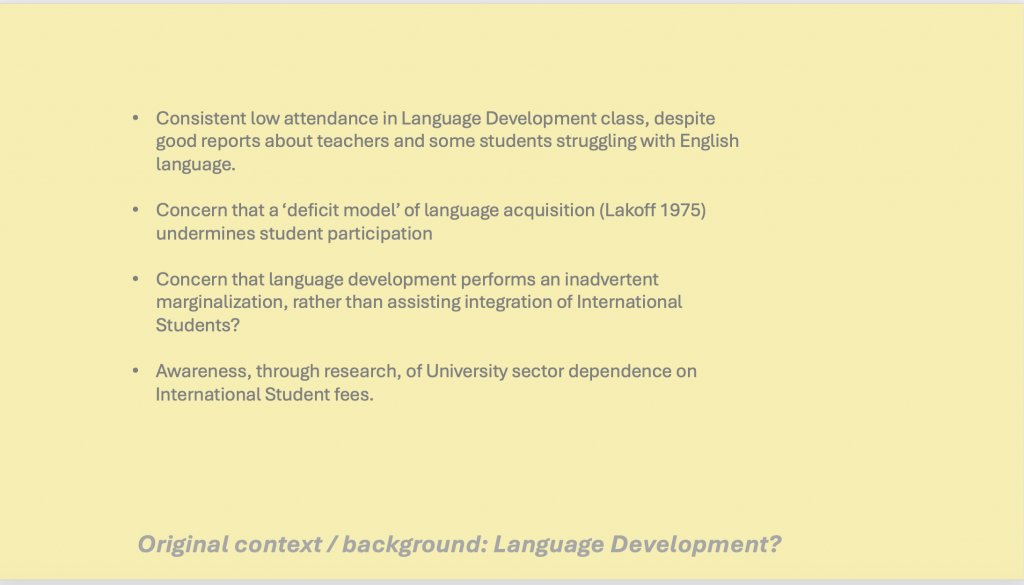
Xunnam suggested international students spend ‘far too much time helping their colleagues to read’. In terms of language development, he questioned how we might support non-academic/ conversational English. He suggested LD functions on a ‘deficit model’, associated with ‘shame,’ that may create barriers for students. Furthermore, how do students access help if not attending language development? He encouraged me to refine my idea, as did Sophie. We discussed the ethical action plan (esp. power, imbalance). We must begin to draft semi structured questions. Feeling pressure to decide…
References:
Associated Press (1995) Clinton’s Informal Meetings Include a Session with Covey. Online: https://www.deseret.com/1995/1/4/19151460/clinton-s-informal-meetings-include-a-session-with-covey/ (Accessed 11/12/25)
Covey, Stephen (1989) ‘7 Habits of Highly Effective People’ U.S.A: Free Press
Delve (nd) The Essential Guide to Coding Qualitative Data. Available: https://delvetool.com/guide/#whatisqualitative (accessed 11/12/25)
Morton, Timothy (2013) Hyperobjects: Philosophy and Ecology after the End of the World. University of Minnesota Press
Optima (2024) Introducing the Circles of Concern and Influence. Optima Training UK. youtube. Available: https://www.youtube.com/watch?v=I1zTYTlWMCw (Accessed 11/12/25)
Blog 2: This is the Project
Arrival-Background: From initial research
The university sector has become financially reliant on international students, but their continued application should not be taken for granted (Ebel 2024, 12). [1]
UAL’s financial statement 2024-2025, outlines risks addressed in its forthcoming ‘Education Strategy’. Among these are student recruitment risks and improving student experience (UAL 2025a, 31).
Delivering annual recruitment targets is coupled with a tendency to recruit students from one international region deemed a ‘top risk’, leading to organisational vulnerability. This is undoubtedly a reference to our reliance upon students from China.
The university claims to have structured plans to increase diversity and ‘expand our presence into new geographic markets… tailored to local demand.’ (UAL 25a, 31). It is notable here that ‘diversity’ and ‘geographical markets’ are aligned, as though to do the work of diversity necessitates a process of marketisation, ‘tailored to local demand,’ rather than the demand of UAL to maintain its profit rate from international students. Indeed, the fluidity of ‘International students’ becomes synonymous with the fluidity of global markets.
Student recruitment is clearly vulnerable to geo-politics and external (governmental) policy. For example, the possibility of a Reform government, will alter such issues more radically than at present. Recent immigration into the UK is at an all-time high (see UK GOV, 2025) The UK Immigration White Paper seeks to remedy this, putting restrictions on visas, including those for students (UK GOV 2025). This will include changes to the Graduate Visa route and introduce a £925 international student levy (ISL) per student from 2028. This fee will be taken from HE providers income to be reinvested into ‘the higher education and skills system’ (Knott 2025).
The concern around poor ‘student experience’, also requires ‘targeted interventions’ to make continued improvements to the National Student Survey (ibid 31). Indeed, in keeping with the inherent fluidity of neoliberalism, international student recruitment is never a static, or assured issue. Adding to this pressure, it is notable that UAL’s ‘Intercultural Communication’ teams have recently been dismantled.
Language Development offers international students an additional class throughout undergraduate and postgraduate study. Designed to help students integrate into courses, and providing improved access to academic language. On the landing page of UALs ‘English Language Development for Students’, UAL states that:
“If you are a current UAL student and speak English as an additional language, we can help you with the language skills you need to be successful on your course.” (UAL 2025b). The facility offers classes; academic English skills; tutorials and progress tests (ibid) and is accredited by the British Association of Lecturers in English for Academic Purposes (BALEAP).
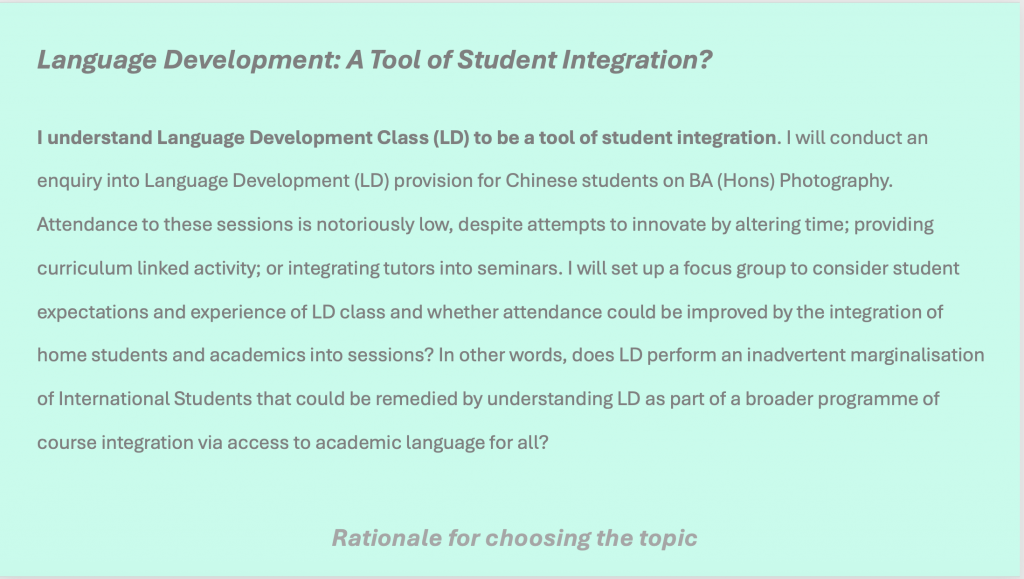
My ARP study aims to foreground attendance, access and perception of Language Development (LD) classes, bearing in mind that students are currently exclusively from China. Colleagues express concern with the issue of ‘cultural clustering’, reporting that Chinese students often cannot be encouraged to work in diverse groups that include home students. The classes are currently added to my own lecture/seminar day, associated with ‘academic language’, despite the fact that the academic standard of students writing tends to be very good. The classes are notoriously poorly attended, despite attempts to make alterations to timings; explore online or IRL options; or integrate LD teachers into timetabled seminars. And despite the fact that the perception of LD teachers, tends to be very good. My concern is that these classes perform a further ‘marginalisation’ of students.
What I want to know: Would Language Development sessions be more effective tools of integration if they included academics and home students?
References:
Ebel, Clementine Pippa (2024) How can UK universities improve their strategies for tackling integration challenges among Chinese students? Hepi Report 183 Available: https://www.hepi.ac.uk/wp-content/uploads/2024/12/HEPI-Report-183-Tackling-integration-challenges-among-Chinese-students.pdf Accessed November 8th 2025 accessed 11/12/25
Knott, Matthew (2025) Government confirms £925 International Student Levy Rate for England HE Providers, ST Magazine, Study Travel Network Available: https://studytravel.network/magazine/news/0/31825#:~:text=The%20UK%20government%20has%20confirmed,a%20six%20per%20cent%20levy. accessed 11/12/25
UAL 2025a: University of the Arts London: Annual Report and Financial Statements 24/25. Available:chromeextension://efaidnbmnnnibpcajpcglclefindmkaj/https://www.arts.ac.uk/__data/assets/pdf_file/0027/513765/UAL-Report-and-Financial-Statements-31-July-2025.pdf
UAL 2025b: Language Development for Students (https://www.arts.ac.uk/study-at-ual/language-centre/english-language-development-for-ual-students) accessed 11/12/25
UK GOV (2025) Policy paper ‘Restoring control over the immigration system’
https://www.gov.uk/government/publications/restoring-control-over-the-immigration-system-white-paper/restoring-control-over-the-immigration-system-accessible#fn:9 accessed 11/12/25
[1] Australia suffered a 39 per cent drop in Chinese students between 2019 and 2022, and should serve as a cautionary tale (12).
Blog 3: The Experience of International Students: Nancy Arthur (2017) Further Research
Nancy Arthur (2017) explores ways in which ownness is on international students to integrate into English speaking universities. International students’ experiences are bound by specific influences on identitarian issues such as race, social class, gender, and perceptions of the destination country (888). In particular, for international students, ‘quality of academic life, and sense of belonging is strongly allied to the academic supervisory relationship’ (ibid 889).
Lacking international perspectives can perpetuate racialized bias, leading to dissatisfaction regarding educational life (888). It is suggested that simply bringing home+ international students together is not sufficient to “foster meaningful cross- cultural interactions in academic environments (Leask and Carroll 2011). Faculty need to encourage mutual learning and encourage shared leadership in discussion of curriculum content (Arthur 2017, 889).
If students are ‘given opportunities to interact at level (sic) deep enough to foster intellectual and social engagement, they are more likely to feel a sense of belonging…’ (Arthur 2017, 889).
It might be understood that UAL language development (LD) classes can relieve both academic staff and home students of concern regarding integration, passing over problems of cultural integration to external LD staff. In this way, complex issues of cultural integration are reduced to an issue of language that the individual student must ‘overcome’. As my own recent attendance to a language development session demonstrated, issues are not limited to literal ‘translation’ between languages, but are also problems of context; volume; colloquialism; discipline-specific technical jargon; painful self-consciousness.
Most students are concerned with making friends and- in some way- ‘fitting in’. For International Students such issues are exacerbated by physical distance from home that in themselves, can lead to ‘strong feelings of isolation and failure’ (Johnson and Sandhu 2007 in Arthur 2017, 889). Indeed, student capacity to manage perceived academic and psychosocial demand is strongly linked to social support (Fritz, Chin, and DeMarini 2008; Zhang and Goodson 2011 in Arthur 2017, 889). Help-seeking behaviours can vary greatly across cultures, as do support practices and perceived stigma of seeking help (ibid 890).
It is also the case that local (home) students may not be so driven to form allegiance across cultural divides as international students (ibid 891). Arthur gives a number of reasons:
- Local students are often connected to friendship and family groups, not needing to extend social circles.
- International students are often positioned as ‘others’, due to intolerance of diverse practices or unexamined racism.
- Competition, whereby international students are viewed as unequal, even inferior (Heng 2016; Marginson 2013). (It should be noted that we always have International students among our highest achieving students within and beyond the course).
- Different norms for demonstrating knowledge (e.g. passive versus active participation) mean students may be treated as ‘invisible’ in classroom interactions, and dismissed in group assignments (Arthur 2017, 891)
While local (home) students may focus on exotic ideas of travel+ exchange to increase cultural competencies, they may overlook the benefit of instruction and support by fostering positive interpersonal interaction with present international students (Arthur 2017, 891-2)
References:
Arthur, N. (2017) Supporting international students through strengthening their social resources Studies in Higher Education 42:5 pp 887-894 AVAILABLE Accessed: November 5th 2025
Blog 4: Students from China
Due to the fact that our international students are largely from China, I consulted the HEPI report ‘How can UK universities improve their strategies for tackling integration challenges among Chinese students?’ exploring how universities can better assess effectiveness of support for Chinese students? How might new insights maintain appeal of institutions, ensuring Chinese students are fully supported (4). The report offers practical recommendations: enhancing admissions assessments and incorporating internships into academic programmes (ibid 5). Chinese students currently represent over 25 per cent of the international student body in the UK (2021/22) set to grow, potentially by as much as 70% by 2030 (ibid 4). Although this may alter (see previous blog).
Indeed, some Chinese students feel like they are treated as sources of revenue rather than valued community members (ibid 7).
Chinese students face problems of language barriers, ‘social clustering’ and difficulties navigating job market, requiring thoughtful, policy-driven responses (ibid 4). Ebel’s survey reveals only 20 per cent of Chinese students feel truly integrated in the UK (14).
The paper makes recommendations:
- Implement robust assessments for spoken English during admissions, (e.g. AI-powered online interviews used in global job recruitment).
- Language support should be ongoing, free + include a buddy system, to improve integration.
- Chinese recruitment agents should rebalance distribution of Chinese students across courses and campuses; offering accommodation support to reduce social isolation.
- Digital literacy should be provided for UK-specific platforms and apps, fostering better integration. Apps like WeChat and Little Red Book as communication platforms and sources of local information over Western apps like WhatsApp or Instagram (HEPI 5-6).
- Tailored career support services, including internships and work experience opportunities, to enhance UK employability, embedding work experience and internships in course (almost 80 per cent) have never received support (Ebel 2024, 6).
We have seen that UK universities depend on Chinese students for financial stability, with Chinese students paying £2.3 billion a year in fees (Ebel 2024, 6). There is a risk the UK will become less popular with students from China: the number of Chinese applicants dropped by 4 per cent in 2022.
English language proficiency is lower among Chinese students than those from other developing economies like India and Malaysia. IELTS (International English Language Testing System) scores do not always accurately reflect language competencies, particularly of spoken English, since high scores can be attained through methodical and intensive drilling practice. Some Chinese applicants are spending more than £10,000 to pay for support with UCAS applications. English language proficiency is further de-prioritised by the Chinese Government (ibid 6).
There is an uneven distribution of Chinese students across UK HEIs, with over 15,000 at some institutions and less than 10 at others (9). This is deemed to be a cause of ‘acute social clustering’, where students mostly socialise with others from China (Ebel 2024, 6). This issue of ‘clustering’ is mentioned in is one we will come back to in the final posts.
90% of UK HEIs are already adopting diversification strategies, shifting their focus towards regions such as India, the United Arab Emirates and Africa (10). The slowdown of China’s economy could reduce willingness to send children overseas; simultaneously, the value of undertaking more education is being called into question (11).
Investment in Chinese students should enable smooth transition from China, supporting integration on arrival (13). Zizhao Guo from Shanghai explained ‘Chinese instruction of English in schools focuses on examinations, so it wasn’t helpful for improving spoken English’ (Ebel 2024, 16). Asked about resources provided by UK universities, Chinese students expressed lower satisfaction with the support on offer; Although 48 per cent claim to receive sufficient support, this is low compared with other areas (14)
Given the financial contribution of Chinese students to UK HEIs, It is in the interest of universities to deepen integration and enhance social/ academic contribution of Chinese students. facilitating a better campus experience for all (17).
This research has led to my own wish to integrate UK Social Media training for all International students as we have not paid sufficient attention to this area.
Reference:
Ebel, Clementine Pippa (2024) How can UK universities improve their strategies for tackling integration challenges among Chinese students? Hepi Report 183 Available: https://www.hepi.ac.uk/wp-content/uploads/2024/12/HEPI-Report-183-Tackling-integration-challenges-among-Chinese-students.pdf Accessed November 8th 2025 accessed 11/12/25
Blog 5: Notes on Project Design
Mixed Methods Approach:
From initial research, a strategy of mixed methods might be the ideal approach to this project, being that it would allow for both qualitative and quantitative research methods. And allowing for both statistical evidence, and insight into personal experience and motivation. However, time constraints make this improbable.
Quantitative and Qualitative approaches.
QUANTITATIVE: (from Greenbook 2025)
5 main types:
- Survey research (questionnaires/ polls).
- Experimental (controlled experiments/ A-B testing).
- Correlation (relationships between variables).
- Longitudinal Research (tracking data over time)
- Descriptive research (analysis of trend and statistical summaries.
(Greenbook 2025)
QUALITATIVE: (from Delve 2024)
Qualitative methods include numerous approaches such as Grounded Theory;
Narrative Research; and various Data collection methods:
- Semi-structured Interviews
- In-depth interviews
- Focus Groups
- Observations
- Ethnographies
- Diaristic
- Case Studies
(Delve 2024 https://delvetool.com/guide)
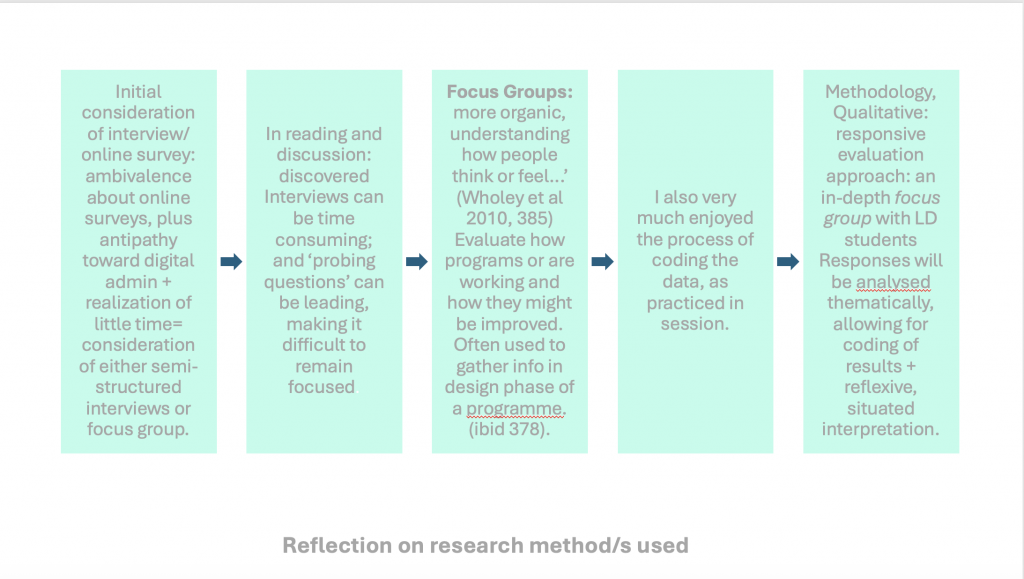
Having analysed the options, I selected two qualitative forms for further investigation: semi-structured interviews and focus groups.
Structured Interviews:
Stick to predetermined questions:
Standardises data; maintains focus; can be restrictive.
Unstructured interviews:
Have a topic, no pre-set questions; like an everyday conversation.
Semi-structured interviews offer the best of both the above allow for:
Gather insights
Exploring participants thoughts+ beliefs
flexibility to go ‘off-script’
However, interviews can be time consuming/probing questions can be leading, making it difficult to retain focus. Due largely to time constraints, I explored the possibility of focus groups, allowing for more data from one session.
Focus group
Focus groups (FGs) work particularly well in understanding how people see needs and assets in their lives and communities, or in understanding how people think or feel about something. Uses may evaluate how programs or products are working and how they might be improved (Wholey et al 2010, 385); for gathering information; or (key for this project) getting information in the design phase of programs (ibid 378).
Questions are carefully sequenced, increasingly specific to topic of study; progressively direct participants to discuss the topic in detail… aim is not consensus but gathering a range of opinions and experience. (ibid 381).
The environment should be permissive and non-threatening. The moderator will ask a question then listen, letting participants interact. The group is working well when participants build on comments rather than continually responding to moderator (ibid 383).
Moderator must be open to opinions, setting out ground rules: there are no wrong answers (ibid 381-2).
QUESTIONS:
- Address the purpose of your study.
- should be conversational and easy to understand; using words participants would use.
- early questions set tone for conversation; later, focus on key topics.
- Phrase questions so they are open ended.
- Use questions that get participants actively involved
The methodology for this study will be qualitative, taking a responsive evaluation approach. This will consist of an in-depth focus group with students who have attended LD (and potentially, a second focus group with LD tutors). Responses will be analysed thematically, allowing for coding of results, as well as a reflexive, situated interpretation.
References
Delve (nd) The Essential Guide to Coding Qualitative Data. Available: https://delvetool.com/guide/#whatisqualitative
Greenbook (2025) 5 Examples of Quantitative Research Methods & When to Use Them https://www.greenbook.org/insights/quantitative-market-research/5-examples-of-quantitative-research-methods-when-to-use-them
Wholey, J.S.; Hatry, H.P.; Newcomer K.E. (2010) Handbook of Practical Program Evaluation (third edition) San Francisco: Jossey-Bass. Wiley Imprint
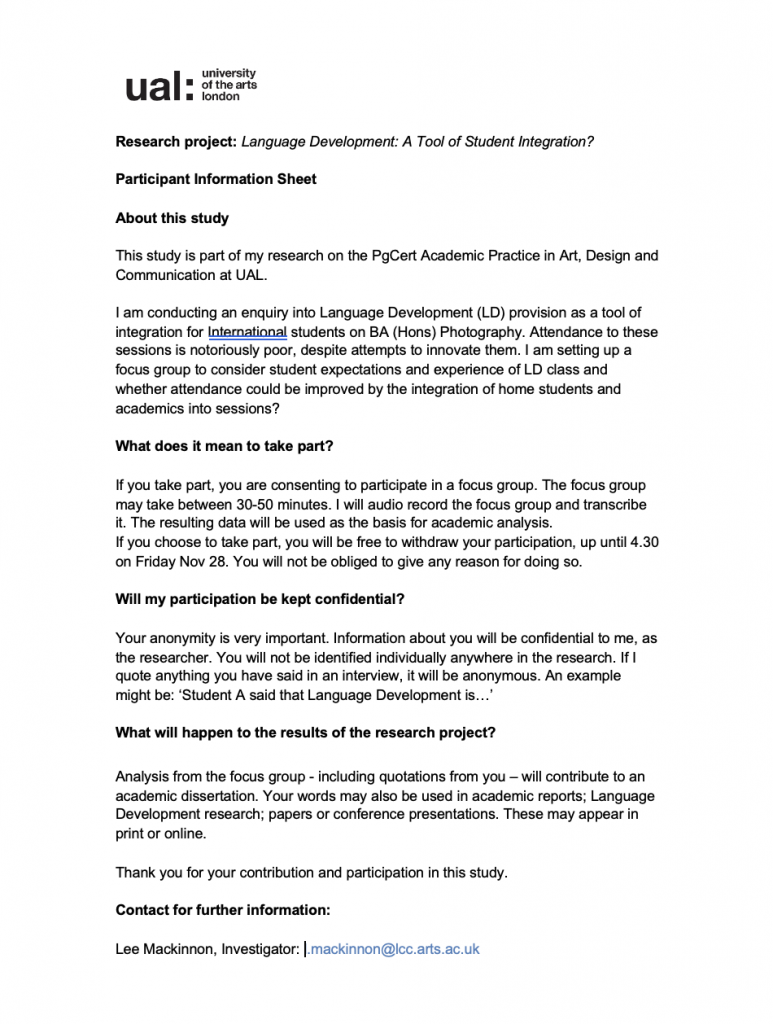
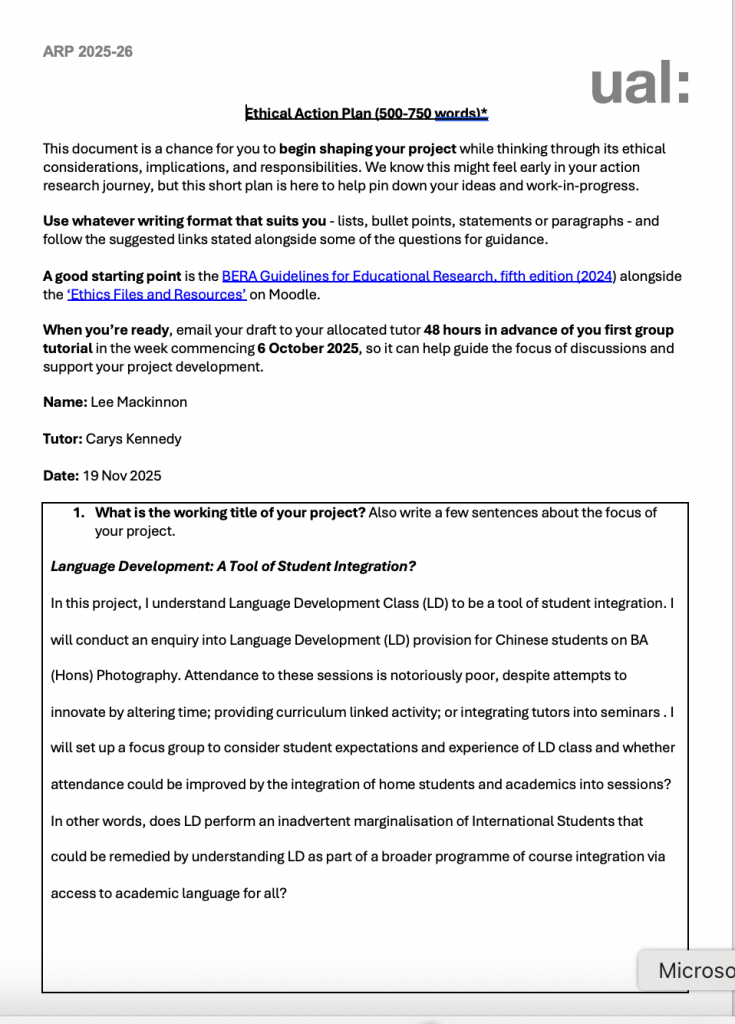
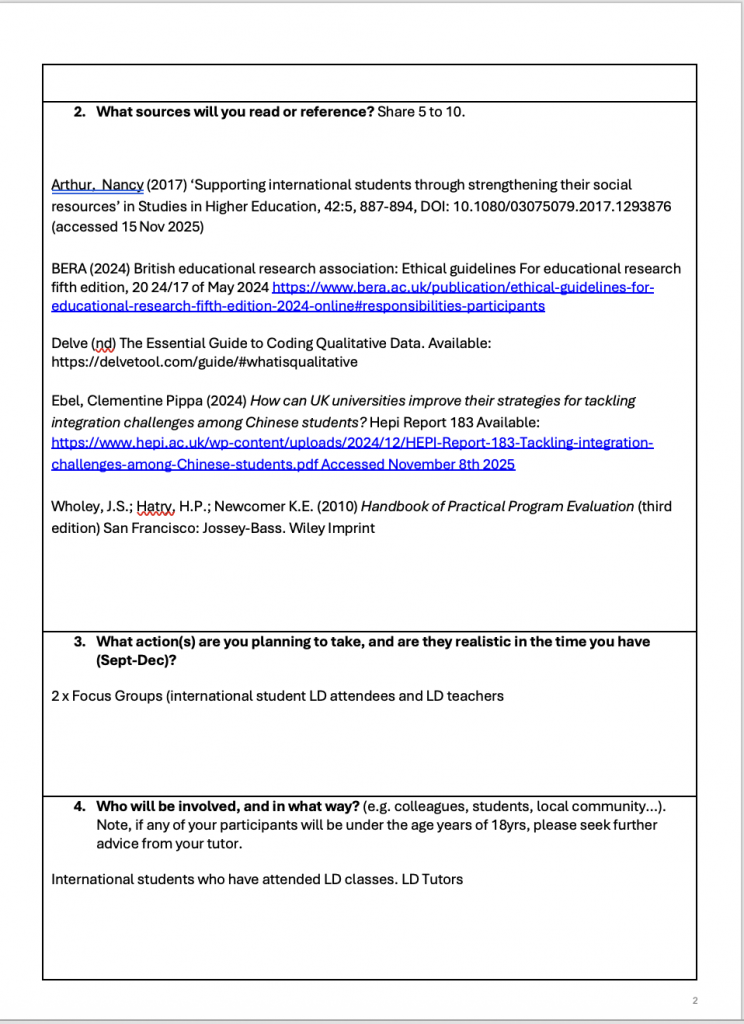
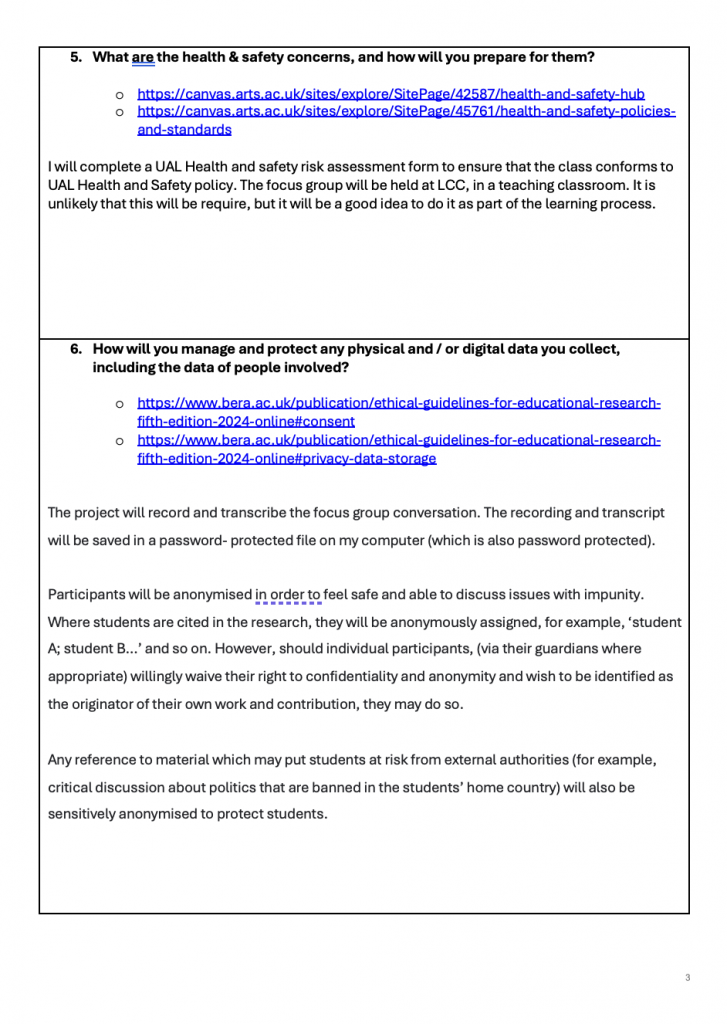
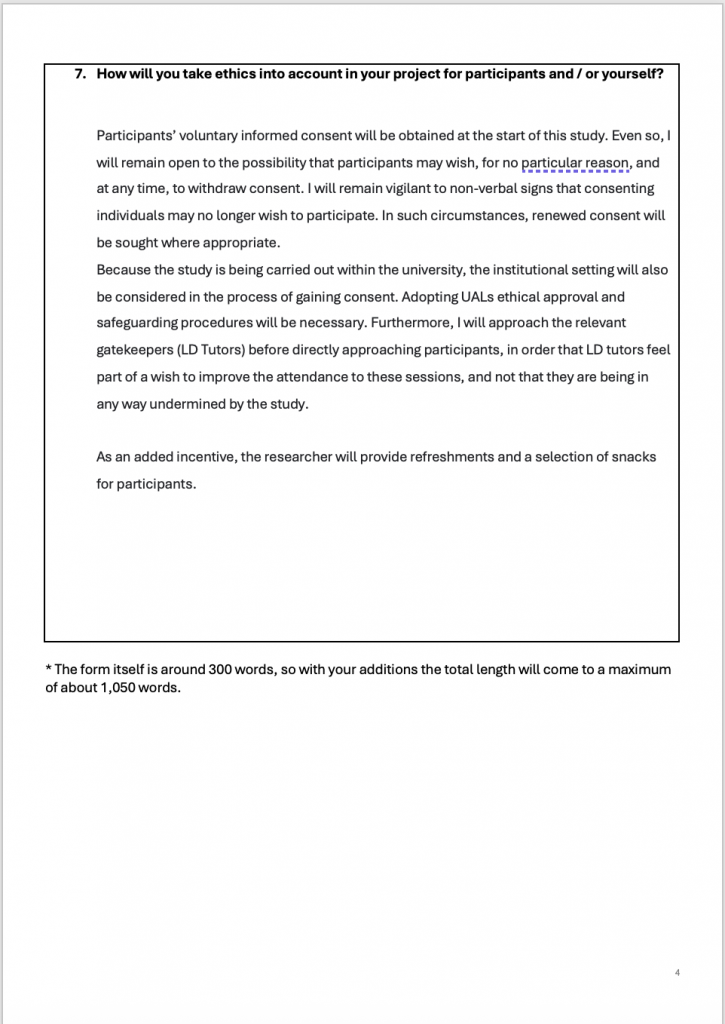
Blog 6: Participant Information Sheet + Ethical Action Plan
Blog 7:
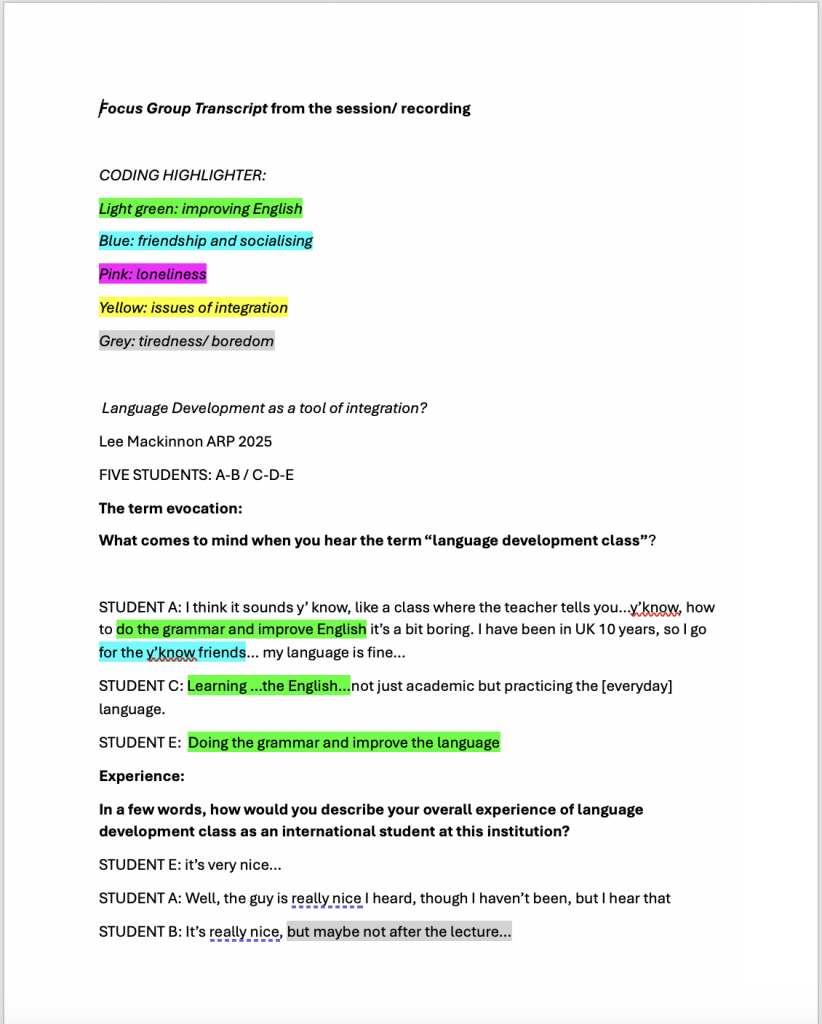
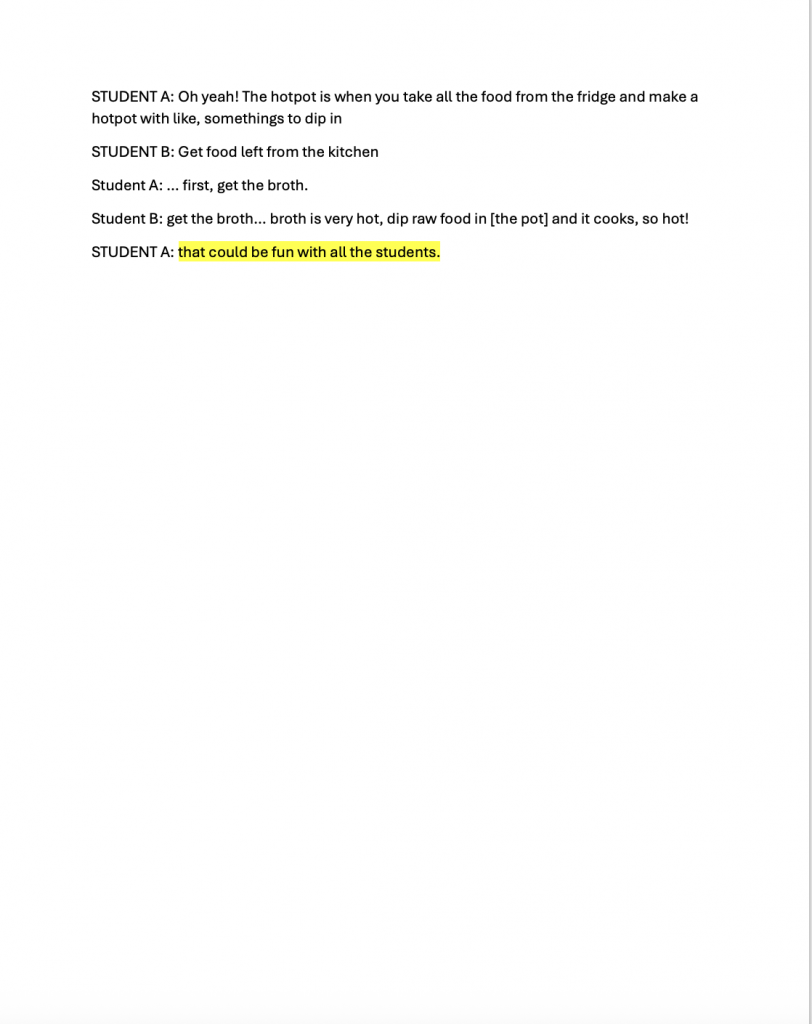
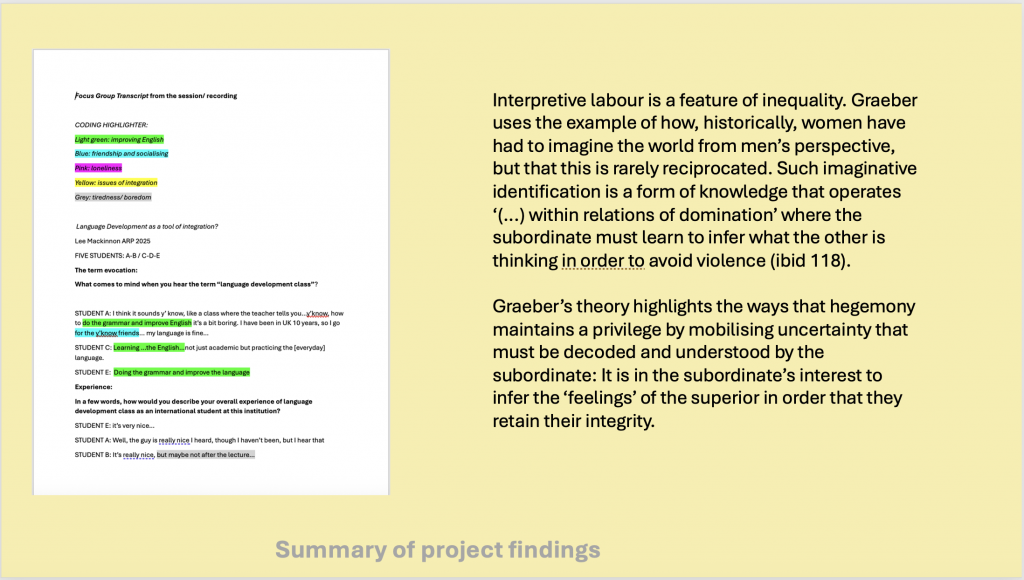
Coded Transcript of Focus Group (excerpt):
Page 1:
Page 2:
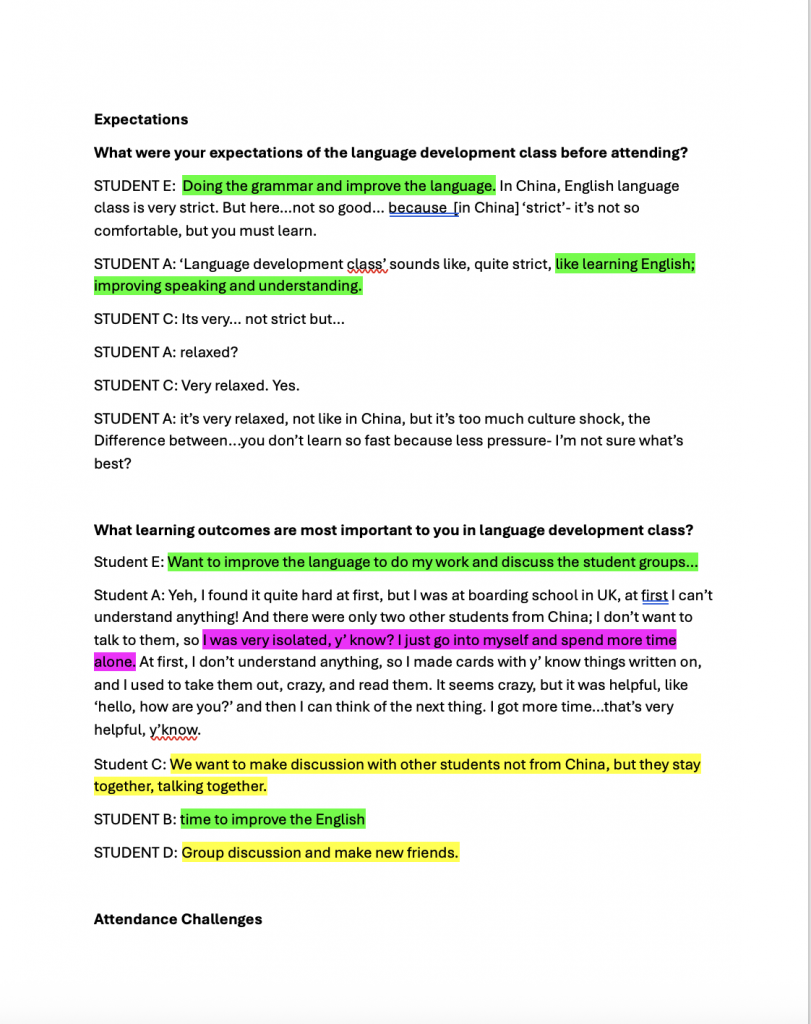
Page 3:
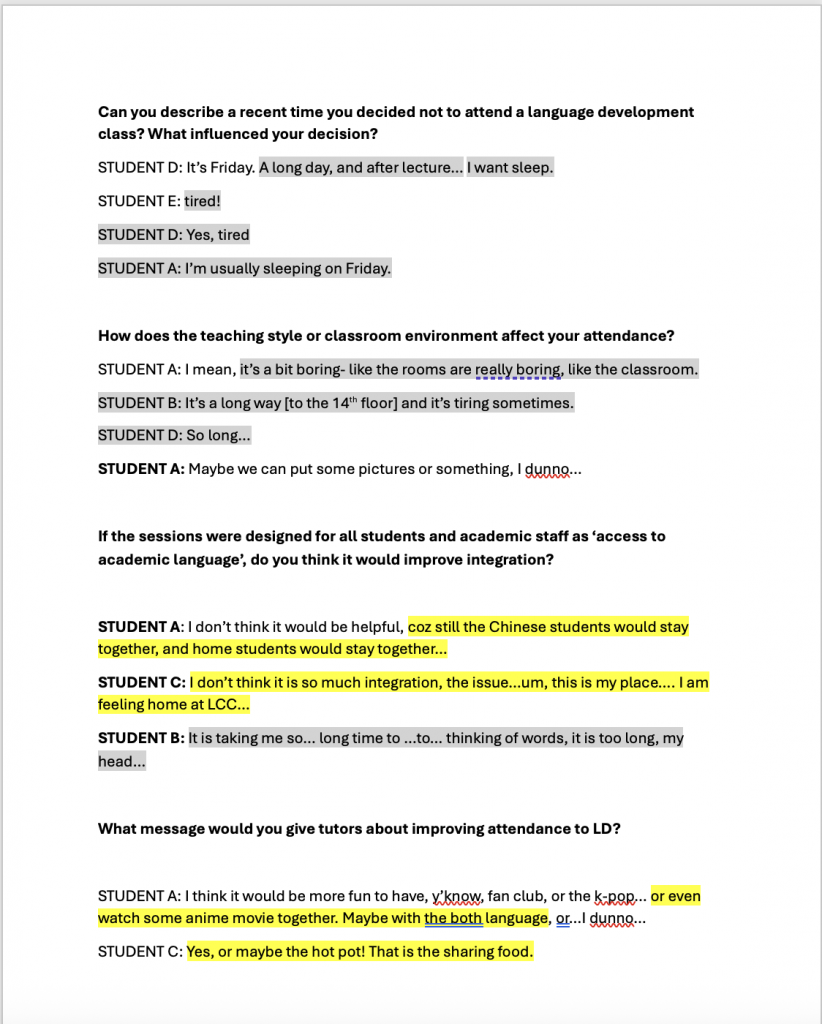
Page 4:
BLOG 8
Final Reflections:
… The very promise of inclusion can be the concealment and thus extension of exclusion. This is why a description of the process “of being included” matters (Ahmed 2012,183).
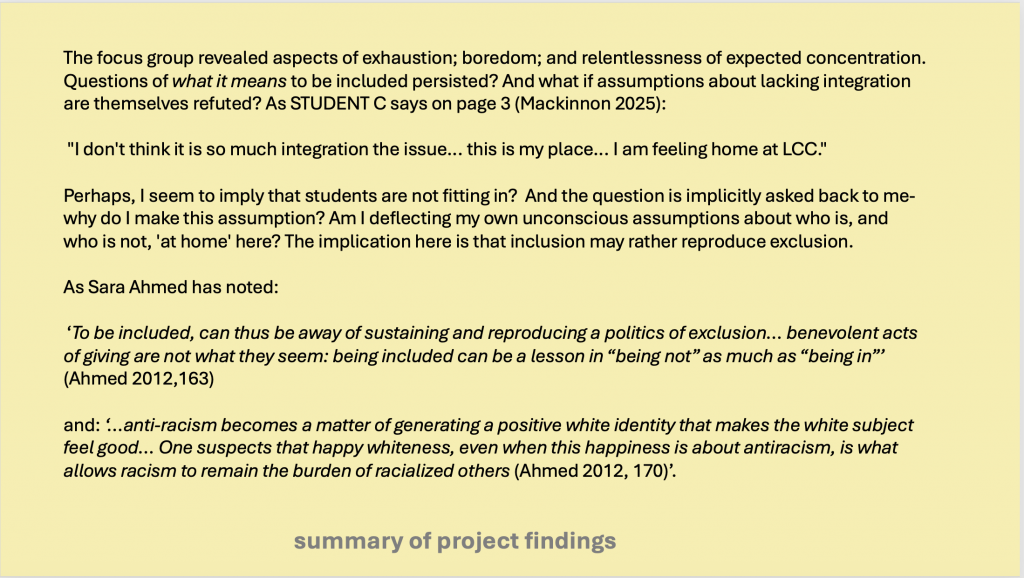
What does it mean to be included? And what if assumptions about lacking integration are themselves refuted? As STUDENT C says on page 3 (Mackinnon 2025): “I don’t think it is so much integration the issue… this is my place… I am feeling home at LCC.” With this assertion, I worry the student assumes I imply that she is not fitting in? And the question is implicitly asked, why make this assumption? Am I deflecting my own unconscious assumptions about who is and who is not ‘at home’ here?
The implication is that inclusion may rather reproduce exclusion. As Ahmed has said:
To be included, can thus be a way of sustaining and reproducing a politics of exclusion… benevolent acts of giving are not what they seem: being included can be a lesson in “being not” as much as “being in” (Ahmed 2012,163).
In the coding of the focus group, findings can be seen to indicate underlying structural issues- including the question of my own beneficence as a white academic employing an anti-racist stance in attempts to improve the experience of International students from China. The issue of inclusion recurs in comments about ‘clustering’ mentioned by Erbel (blog 4) and more locally (blog 2) where a propensity for clustering among Chinese students is discussed among staff. However, clustering in the focus group is attributed to home students (page 3 STUDENT A) who likely remain invisible to themselves, or the inequality in expectations of shared participation.
We note the sheer exhaustion of students (page 2); the ‘boredom’ experienced in this demonstration of inclusivity-an exhausting language group, post lecture + seminar. STUDENT B, struggles painfully to find words, under pressure of questioning. Later, I wonder whether we would schedule classes for home students after such an intellectually demanding day?
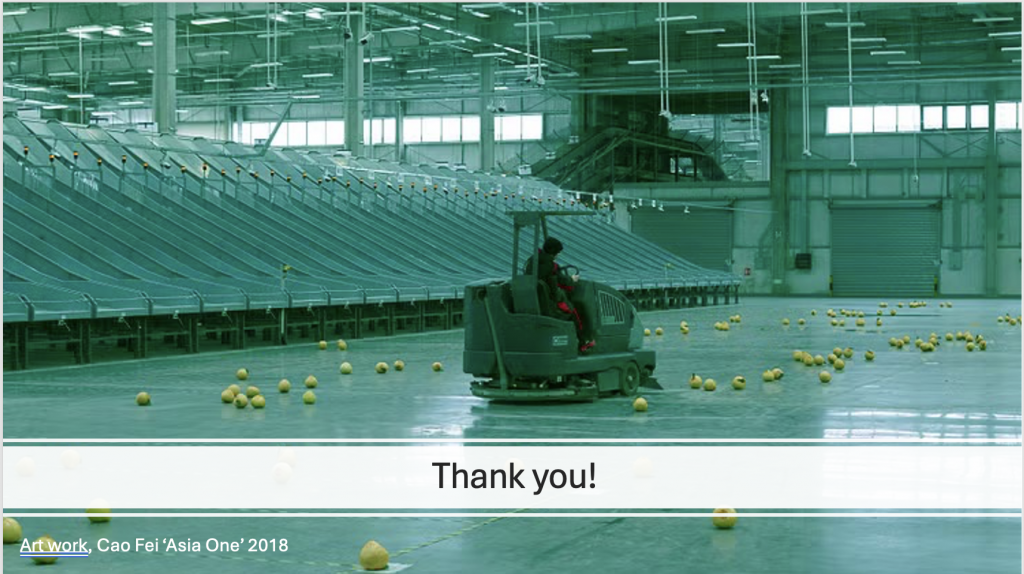
Attempts at integration through language development begin to bear hallmarks of arduous and prolonged labour. I was reminded of Mirele Laderman Ukeles ‘Manifesto on Maintenance Art’, where the artist considers the invisible labour of ‘cleaning up.’ Here, I replace the word ‘maintenance’ with ‘language development’: ‘Language development is a drag. It takes all the f**** time’… (Ukeles 1969, 2c). This is a form of ‘Interpretive labour’ (Graeber 2012, 118), a feature of systemic inequality. Graeber uses the example of how, historically, women have had to imagine the world from men’s perspective, but that this is rarely reciprocated. Such imaginative identification is a form of knowledge that operates ‘(…) within relations of domination’ where the subordinate must learn to infer what the other is thinking in order to avoid violence (ibid 118). Graeber’s theory highlights the ways that hegemony maintains a privileged status by mobilising uncertainty that must be decoded and understood by the subordinate: It is in the subordinates interest to infer the ‘feelings’ of the superior in order to retain their own integrity.
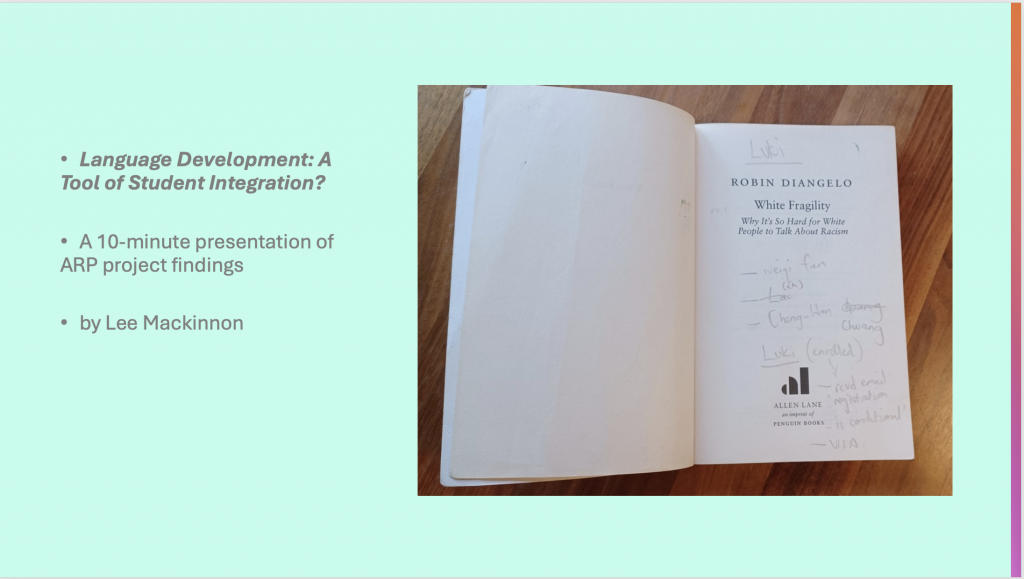
While ‘inclusion’ may bring ‘… those who have been recognised as strangers into the nation… making strangers into subjects, those who, in being included, are also willing to consent to the terms of inclusion’ (Ahmed 2012, 163). Eliciting consent to unspoken terms of inclusion may contribute to tiredness and boredom: what is asked requires a further translation- of what is not explicit. Efforts toward anti-racism may become no more than a quality of whiteness, absolved of complicity in a structurally racist society. As Diangelo has pointed out: “… we will put our energy into making sure that others see us as having arrived [rather than]… engaging in ongoing self-awareness… and actual anti-racist pedagogy’ (Diangelo 2018, 5).
For Ahmed, the institutionalisation of diversity work doesn’t guarantee diversity (Ahmed 2017, 96). If diversity work is exposed when the system is working, then attempts to transform that same system are simultaneously blocked (Ahmed 2017, 97). Indeed, the diversity worker can become the point of blockage (ibid 99).
Here anti-racism becomes a matter of generating a positive white identity that makes the white subject feel good… One suspects that happy whiteness, even when this happiness is about antiracism, is what allows racism to remain the burden of racialized others (Ahmed 2012, 170).
During the ARP project, I have learned important research skills associated with qualitative research: assessing methods; gathering and coding data; presenting professional ethical action plans, and participant info sheets, as well as presenting results. I have recognised the importance of defining and specifying key terms, such as ‘inclusion’ and ‘integration’, which will be the next phase.
References:
Ahmed, Sara (2012) On Being Included: Racism and Diversity in Institutional Life. Durham and London: Duke University Press.
Ahmed, Sara (2017) Living a Feminist Life. Durham and London: Duke University Press
Diangelo, Robin (2018) ‘White Fragility: why it’s so hard for white people to talk about racism.’ Alan Ln., Penguin Books.
Graeber, David (2012) ‘Dead Zones of the Imagination: On Violence Bureaucracy and Interpretive Labour.’ HAU: Journal of Ethnographic Theory 2 (2) Chicago: The University of Chicago Press. pp. 105–28
Mackinnon, Lee (2025) Coded Transcript of Focus Group: Language Development as a Tool of Integration (BLOG) Available:https://leemackinnon.myblog.arts.ac.uk/wp-admin/post.php?post=195&action=edit
Ukele, Mirele Laderman (1969) Maintenance Art: Proposal for an Exhibition
Available: chrome-extension://efaidnbmnnnibpcajpcglclefindmkaj/https://queensmuseum.org/wp-content/uploads/2016/04/Ukeles-Manifesto-for-Maintenance-Art-1969.pdf (accessed Jan. 5, 2025).
Slideshow: ARP Presentation

Join 900+ subscribers
Stay in the loop with everything you need to know.